- Need2Know, by Cheddar
- Posts
- Stocks are back to pre-Iran war highs
Stocks are back to pre-Iran war highs
Plus: Meta unseats Google as world's largest digital ad player

Matt Davis
April 15, 2026
In partnership with

This week’s world-famous news haiku competition™ is about how the White House has warned staff not to profit by placing bets on prediction markets about the Iran War. Send me your entry — to haiku at cheddar dot com — by noon ET Thursday, for consideration by your Cheddar peers.
And now, news!
Matt Davis — Need2Know Chedditor
News You Need2Know
What’s the stock market up to, eh?*
Companies mentioned in today’s newsletter
$BLK ( ▲ 1.21% ) $C ( ▲ 0.85% ) $OWL ( ▼ 1.34% ) $ARES ( ▼ 1.54% ) $APO ( ▼ 0.97% ) $APP ( ▼ 4.71% ) $AMZN ( ▼ 1.87% ) $GSAT ( ▼ 0.71% ) $WFC ( ▲ 1.35% ) $JPM ( ▲ 1.25% ) $META ( ▼ 3.72% ) $GOOGL ( ▼ 2.47% ) $AMZN ( ▼ 1.87% ) $STARL ( ▼ 0.89% ) $AAPL ( ▲ 0.43% ) $NFLX ( ▼ 2.87% ) $V ( ▲ 0.46% ) $CNNWQ ( ▼ 19.2% ) $WBD ( ▲ 0.03% ) $OPENAI ( 0.0% ) $ANTHROPIC ( ▼ 2.23% )
Stocks are back to pre-Iran-War highs

(Google Nano Banana Pro)
Wall Street is buzzing with excitement as the stock market rallies to the edge of an all-time high. The S&P 500 added 1.1% yesterday, driven by climbing hopes that renewed US–Iran talks could prevent a worst-case scenario for the global economy. The wave of optimism also helped ease the price of Brent crude oil, which fell 4.1% to $95.27 a barrel.
Corporate earnings are taking center stage, and several big names saw impressive gains yesterday. Financial giants BlackRock $BLK ( ▲ 1.21% ) and Citigroup $C ( ▲ 0.85% ) rose 3.6% and 3.3%, respectively, after delivering stronger-than-expected profit reports. Meanwhile, alternative investment firms are also shining brightly: Blue Owl Capital $OWL ( ▼ 1.34% ) surged 7.9%, Ares Management $ARES ( ▼ 1.54% ) climbed 5.4%, and Apollo Global Management $APO ( ▼ 0.97% ) rose 3.5%.
In the tech space, AppLovin $APP ( ▼ 4.71% ) gained 4.2% as software companies broadly rallied. Amazon $AMZN ( ▼ 1.87% ) stock climbed 4.3% alongside a 9.8% jump for Globalstar $GSAT ( ▼ 0.71% ) , following news that the tech giant plans to acquire the satellite company (see more on that story below).
Not every stock joined the celebration, however. Wells Fargo $WFC ( ▲ 1.35% ) dropped 4.4% following weaker revenue. JPMorgan Chase $JPM ( ▲ 1.25% ) also dipped slightly, as CEO Jamie Dimon cautiously noted that bank officials cannot predict how the "increasingly complex set of risks" will play out.
Quote of the Day
T-Satellite connects you where towers can’t.
Meta unseats Google as world's largest digital ad player

(Getty Images)
There's a new king in the world of digital advising. For the first time, Meta $META ( ▼ 3.72% ) is on track to overtake Google $GOOGL ( ▼ 2.47% ) as the world’s leading digital ad business this year. According to Emarketer, Meta's net ad revenue is projected to reach an astounding $243.46 billion, edging past Google’s $239.54 billion.
How did the parent company of Facebook and Instagram pull this off? It comes down to a massive AI push and the explosive popularity of short-form video. Meta’s AI recommendation engines recently boosted U.S. Reels watch time by more than 30%, creating massive new space to serve ads.
It is also about long-term strategy. As Max Willens, a principal analyst at Emarketer, told the Wall Street Journal, Meta has demonstrated “incredible patience” in establishing substantial user habits for products like Reels, Threads, and WhatsApp before eventually introducing advertisements.
Meanwhile, Google’s global ad growth is expected to stay flat at 11.9%, partly due to rising product search competition from Amazon $AMZN ( ▼ 1.87% ) . The digital ad landscape is shifting at the top, but the major tech giants are only tightening their overall grip; Meta, Google, and Amazon are projected to control 62.3% of the entire global market this year.
Never lose cell signal again as Amazon buys Starlink competitor Globalstar

A Farewell To Arm: James Franco in “127 Hours” (20th Century Fox)
Have you ever lost cell service in the middle of nowhere? Amazon $AMZN ( ▼ 1.87% ) is making a massive $10.8 billion move to change that by acquiring satellite operator Globalstar $GSAT ( ▼ 0.71% ) . Sadly this will also deprive the world of future movies in which James “canceled” Franco has to saw his own arm off like he did in “127 Hours.”
The bold acquisition supercharges Amazon’s Leo satellite venture in its heated rivalry with Elon Musk’s SpaceX and its dominant Starlink $STARL ( ▼ 0.89% ) network. By securing Globalstar’s highly valuable spectrum resources, Amazon plans to roll out its own direct-to-device satellite fleet starting in 2028.
Globalstar is already a proven player, currently providing the satellite infrastructure that powers emergency SOS and roadside assistance features on Apple’s $AAPL ( ▲ 0.43% ) iPhones. Following the acquisition, Amazon has agreed to a deal with Apple to power satellite services for future iPhones and Apple Watches using Leo's growing network.
The ultimate goal of this space race is to ensure consumers always have internet access, especially in remote, off-the-grid areas. T-Mobile's pitch for its Starlink-powered service is: “T-Satellite connects you where towers can’t.” With Amazon pouring billions into new satellite launches, the battle for your smartphone's signal is officially on!
Song of the Day: The Strokes, ‘Going Shopping’
"Going Shopping," the lead single from The Strokes' upcoming seventh album “Reality Awaits” (scheduled for release on June 26, 2026) has received polarizing reviews. While critics appreciate the tight instrumentation, many are divided over singer Julian Casablancas' heavy use of Auto-Tune. I, however, am not divided over it. I love it.
Why is Netflix’s boss schmoozing cinema owners?

Has hell frozen over? I ask because Netflix $NFLX ( ▼ 2.87% ) , the ultimate streaming disruptor, is suddenly playing nice with movie theaters. Co-CEO Ted Sarandos just made a historic first appearance at Cinemacon to meet with major domestic and international theater owners. Historically, Netflix has been hostile to traditional cinematic releases, but Sarandos appears to be trying to thaw the icy relationship. The meetings focused on building goodwill and celebrating recent collaborative stunts, like a special New Year's Eve screening of the "Stranger Things" finale that netted cinemas a cool $25 million in concession sales.
However, tensions still remain high. The upcoming two-week exclusive IMAX release of Greta Gerwig’s "Narnia: The Magician's Nephew" has owners feeling shortchanged. Tim Richards, CEO of VUE $V ( ▲ 0.46% ) , openly criticized this strategy as a “restrictive model” that “risks undermining the very ecosystem that makes theatrical success possible.”
Despite a 2022 "Glass Onion" theatrical run that former Cineworld $CNNWQ ( ▼ 19.2% ) CEO Mooky Greidinger praised as a “breakthrough,” Netflix is mostly sticking to its streaming-first guns. In fact, it is so tough to sell theaters on Netflix's strict rules that one owner joked that Netflix's head of theatrical distribution, Spencer Klein, is like "St. Jude, the patron saint of lost causes".
My guess is that Sarandos is trying to make nice with movie theaters because his bid to buy Warner Bros. $WBD ( ▲ 0.03% ) fell through.
Open AI investors question its $852 billion valuation

(Getty Images)
OpenAI $OPENAI ( 0.0% ) is valued at an astronomical $852 billion, but some investors are getting jittery as the company radically shifts its strategy. The AI giant is trying to defend ChatGPT's consumer dominance while pivoting hard to chase rival Anthropic $ANTHROPIC ( ▼ 2.23% ) in the highly profitable enterprise coding market.
With Anthropic's annualized revenue reportedly hitting $30 billion compared to OpenAI's $25 billion, some backers worry OpenAI is spreading itself too thin. One early investor didn't hold back, talking to the Financial Times: “You have ChatGPT, a 1bn-user business growing 50-100 per cent a year, what are you doing talking about enterprise and code? It’s a deeply unfocused company.”
Another major investor agreed, telling the FT: "The company was doing too many things...You can’t as a company compete on 30 different fronts".
However, OpenAI's leadership is fiercely defending their vision. Following a historic $122 billion funding round, Chief Financial Officer Sarah Friar dismissed the critics: “The suggestion that investors are not supportive of our strategy defies the facts,” she told the paper. She noted the record-breaking raise reflects "strong conviction in both our direction, current business momentum and long-term value." Chief Revenue Officer Denise Dresser was equally defiant, declaring that while Anthropic had an early advantage, "the market is ours to win.”
It’s sorta like the Mets talking about their position in the baseball hierarchy, relative to the Yankees.
The New Yorker ran a takedown piece on OpenAI boss Sam Altman last week. The most damning allegations characterize Sam Altman as highly deceptive. A secret memo by co-founder Ilya Sutskever's claimed Altman exhibited a "consistent pattern of…lying," concluding, "I don’t think Sam is the guy who should have his finger on the button." An unnamed board member also noted his "almost sociopathic lack of concern for the consequences that may come from deceiving someone." Reddit co-founder Aaron Swartz reportedly warned, "Sam can never be trusted. He is a sociopath." Finally, a Microsoft $MSFT ( ▼ 1.93% ) executive told the New Yorker there is a "real chance he’s eventually remembered as a Bernie Madoff- or Sam Bankman-Fried-level scammer.”
I imagine getting that last quote past Condé Nast’s attorneys was simply a breeze.
Free yourself from advertising forever!
Now you can sign up for an optional ad-free version of Need2Know! Subscribe for just $5 a month, or $50 a year, and you can continue to enjoy this reasonably high-quality newsletter uninterrupted. Bonus: The immense satisfaction that comes from supporting journalism*!
*This counts as journalism, right?
ADVERTISEMENT
Someone just spent $236,000,000 on a painting. Here’s why it matters for your wallet.
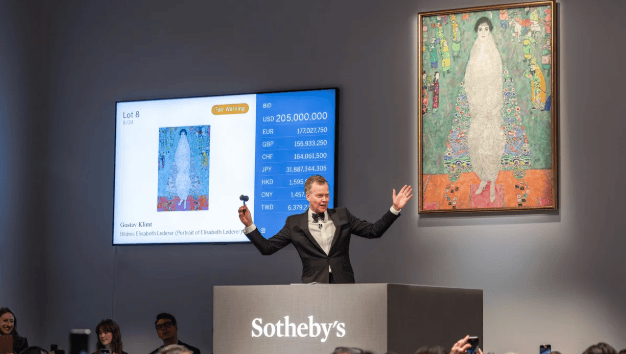
Late last year, a Klimt sold for the highest price ever paid for modern art at auction.
An outlier sure, but it wasn't a fluke. U.S. auction sales grew 23.1% in 2025. The $1-5mm segment even grew 40.8% YoY.
Now, the S&P, teetering on all time highs, just posted its worst quarter since 2022, oil was up 94% (briefly), and Moody's puts recession odds at 48.6%.
Each environment is unique, but after dot-com, post war and contemporary art grew about 24% annually for a decade. After 2008, about 11% for 12 years.
It’s also had near-zero correlation with the S&P 500 since ‘95.*
Now, Masterworks lets you invest in shares of artworks featuring legends like Banksy, Basquiat, and Picasso.
$1.3 billion invested across over 500 artworks.
28 sales to date.
Net annualized returns on sold works held 12 months+ like 14.6%, 17.6%, and 17.8%.
Shares can sell quickly, but my subscribers can skip the waitlist:
*Investing involves risk. Past performance is not indicative of future returns. See important Reg A disclosures at masterworks.com/cd.
END OF ADVERTISEMENT
Should you check your 401(k) today?
👍️
Yes. Pre-Iran-War highs!
Poll of the day: Amazonian ambitions
Poll of the day: Millenials!
We asked: “Which generation has/had it toughest?”
You answered:
🟨🟨🟨🟨🟨🟨 Boomers (204)
🟨🟨🟨⬜️⬜️⬜️ Gen X (122)
🟩🟩🟩🟩🟩🟩 Millenials (209)
🟨🟨🟨⬜️⬜️⬜️ Gen Z (108)
🟨⬜️⬜️⬜️⬜️⬜️ Gen A (43)
686 Votes via @beehiiv polls
 | Want more Cheddar? Watch us!Search “Cheddar” on Samsung, YouTube TV, and most other streaming platforms. N2K is the tip of of the cheeseberg for financial news, interviews, and more. |
Need2Know is covered by Cheddar’s Terms of Service
P.S. So, you remember the cheese puns that used to open this newsletter? Suffice to say, they were divisive. Now, thanks to a thing called “dynamic content options,” I can offer you the option to see cheese puns again, if you’re one of the thousands who got in touch bemoaning their departure six months ago. All you need to do is answer “true” on this survey, and submit it. If you never want to see cheese puns in this newsletter again, don’t click that link, don’t fill out the survey, don’t submit it. Just keep reading and pretend this conversation never happened. Mmmkay? Thank you.